Jump to a section on this page
This fire safety guidance is for residents living in flats. If you’d like fire safety information for residents living in houses, tap here.
Fire doors are crucial for your safety:
- Fire doors close behind you to create a barrier from fire and toxic smoke, preventing them from travelling around a building.
They help to contain the fire within an area, allowing for clear evacuation and safe access for the emergency services. Fire doors are specifically designed to withstand fire for up to 30 minutes.
In a block of flats, you’ll find fire and smoke doors on the stairwells, corridors, and on the front doors of flats. You’ll also see them protecting areas where there’s a risk of fire, such as bin storage rooms or mains electricity service cupboards.
If your front door leads into a communal area in your building, it has to be a fire door. Sometimes you’ll find them inside flats, too, but this depends on an individual flat’s specific design and layout.
- If you need help checking your Fire Doors, or think you might have spotted an issue, please get in touch.
How often will you (Be One Homes) check the fire doors in my building?
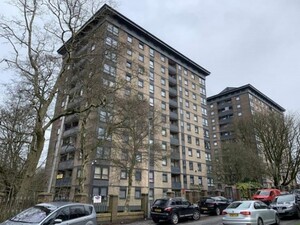
For high rise buildings, 18 metres or above, or at least seven stories in height:
- We'll check flat entrance fire doors annually.
- We'll check communal fire doors, such as bin chute rooms, storage cupboards, cross corridor/landing doors quarterly.
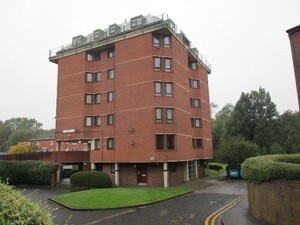
For medium rise buildings, 11 metres to 17.9 metres in height, or at five to six stories in height:
- We'll check flat entrance fire doors annually.
- We'll check communal fire doors, such as bin chute rooms, storage cupboards, cross corridor/landing doors quarterly.
For low rise buildings, two to four stories in height with shared communal areas:
- While we've no set intervals to inspect these buildings, we'll still check them regularly - including during visits for other purposes. If you think something's wrong, please call us on 01204 328000 to report any suspected faults to us.
What do you look for when you check fire doors?
- Any damage to the door's glazing or transfer grille.
- The door closer shuts the door.
- The door closes correctly around the whole frame.
- Any gaps around the door frame, seals, and hinges.
- No visible damage.
Please allow us access for fire door checks:
- For your health and safety, it’s essential to allow access for Fire Door inspections.
We’ll contact you by letter before inspections take place. If you’re not at home when we call, we’ll leave a calling card, with contact numbers for you to arrange a convenient time for the inspection.
By not allowing access for essential health and safety inspections, you may be in breach of your tenancy and, more importantly, placing your safety and your neighbours’ safety at risk.
Never carry out any repairs or alterations to your fire door:
- You should never carry out any repairs or alterations to your fire door, as this could damage it and make it less likely to work in an emergency.
Repairs should always be carried out by a qualified professional, and you should always refer any repairs to us.
Please note that replacing flooring or carpet can also affect a fire door’s ability to open and close properly. Please contact us to check before any replacements are carried out.
Five steps to check your fire doors are working correctly:

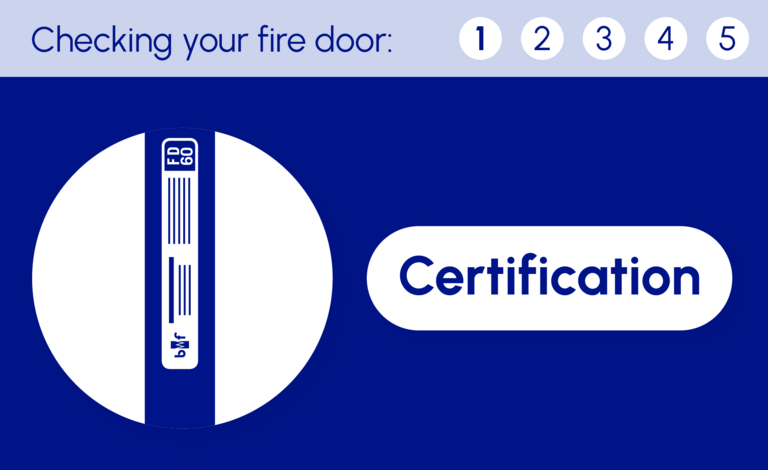
1. Certification:
Look for a label or plug on top (or occasionally on the side) of the door. Without a certification mark, you cannot be sure this really is a fire door.
How to check: use a mirror or the selfie function on your phone's camera.
Concerns? Please let us know.
2. Gaps:
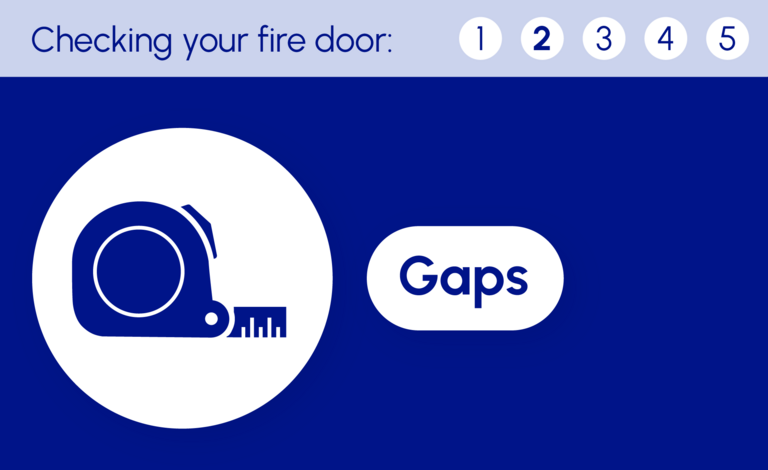
Check the gaps around the top and sides of the door are consistently less than 4mm when the door's closed. The gap under the door can be slightly larger (up to 8mm), but it does depend on the door. Ideally, you shouldn't see light under the door.
How to check: use a £1 coin to give a feel for scale - this is about 3mm thick. It's important to make sure gaps are not so big that smoke and fire could travel through.
Concerns? Please let us know.
3. Seals:
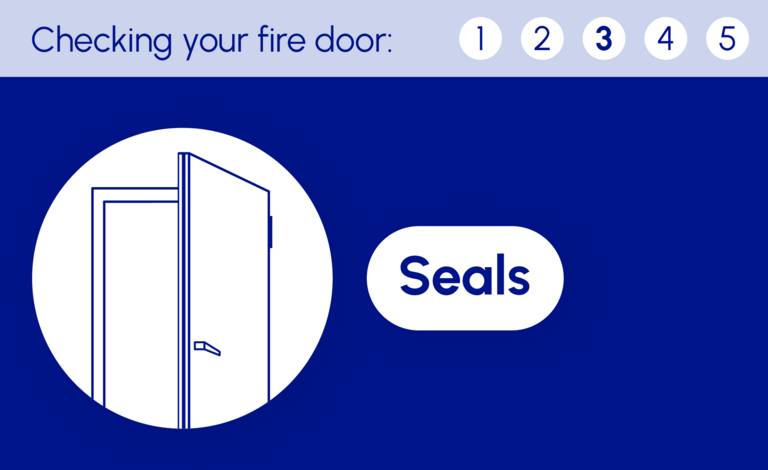
Look for any intumescent seals around the door/frame. Check they're intact with no signs of damage. These will expand when in contact with heat, and will stop fire moving through the cracks.
How to check: take a look at the edges of the door and its frame.
Concerns? Please let us know.
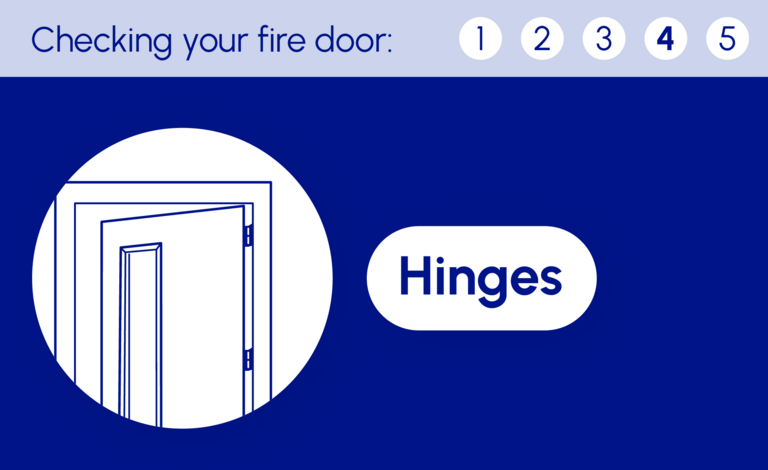
4. Hinges:
Check all hinges are firmly fixed (three or more of them), with no missing or broken screws. This will ensure the door performs properly in a fire.
How to check: open the door and take a look at the hinges.
Concerns? Please let us know.
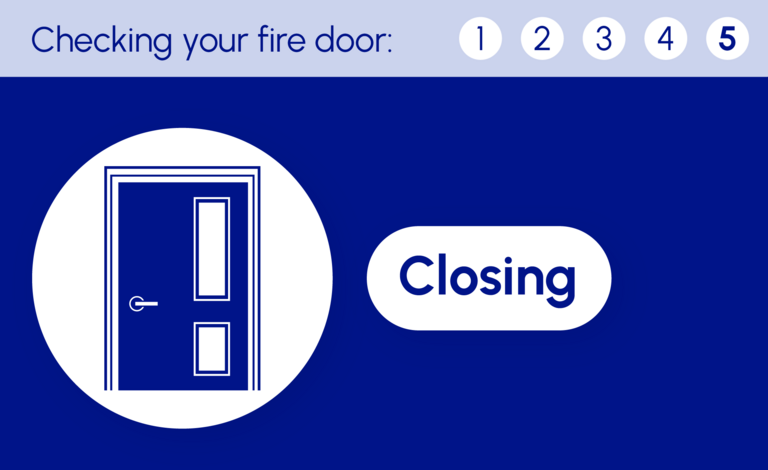
5. Closing:
Check the door closes firmly onto the latch without sticking on the floor or the frame. A fire door is useless when it's wedged open or can't close fully.
How to check: open the door about half way, let go and see what happens when you allow it to close by itself.
Concerns? Please let us know.