Skip to content

Fire safety

Need to report a safety concern? We’re here to help. Please call 01204 328000 or tap here to email our Building Safety Team.

Jump to a section on this page

Stay fire-safe (pull content from Home Safety Guides..? - should this be triaged/split based on unique advice for houses vs. flats?)

Fire safety is a top priority for Be One Homes, and we work closely with Greater Manchester Fire and Rescue Service (GMFRS) to help minimise the risk and impact of fire.

It’s also crucial that you keep yourself safe and don’t do anything which could put you or other people at risk of injury from fire. In this section of our website, you’ll find important guidance and handy tips on staying fire safe.

You can watch our short video below for an overview.

Fire safety do's:

Fire safety don'ts:

The importance of smoke detectors:

Smoke detectors save lives, so regularly check then and report any problems immediately.

The Fire Service recommends that you test your alarm weekly and replace the batteries once a year. Please remember that you are responsible for replacing the batteries.

You should also clean smoke detectors regularly. Vacuuming them is a good way to do it.

For further advice on fire safety, contact your local fire station or tap here to visit the Greater Manchester Fire and Rescue Service (GMFRS) website.

Fire safety planning:

Sync with Home Safety Guide

TBC

For tenants living in houses: what to do if there's a fire, smoke, or if the smoke alarm sounds:

Sync with Home Safety Guide..?

TBC

TBC

TBC

For tenants living in flats: what to do if there's a fire, smoke, or if the smoke alarm sounds:

Sync with Home Safety Guide, rather than stay put policy poster..? 


First up, some general advice to residents:

  • Your building has been built in such a way as to protect the people in it if a fire breaks out. The important thing to remember is that if the fire starts in your home, it is up to you to make sure that you can get out of it.
  • Make sure that the smoke alarms in your flat are tested.
  • Do not store anything in your hall or corridor, especially anything that will burn easily.
  • Use the fixed heating system fitted in your home. If this is not possible, only use a convector heater in your hall or corridor. Do not use any form of radiant heater there, especially one with either a flame (gas or paraffin) or a radiant element (electric bar fire).

If a fire breaks out in your flat:

If you are in the room where the fire is, leave straight away, together with anybody else, then close the door.

Do not stay behind to try to put the fire out, unless you have received suitable training.

Tell everybody else in your flat about the fire and get everybody to leave. Close the front door and leave the building.

Call the Fire Service.

If you see or hear of a fire in another part of the building:

It will usually be safe for you to stay in your own home.

You must leave your home if smoke or heat affects it or you are instructed to do so by the Fire Service. Close all doors and windows.

Call the Fire Service.

Calling the Fire Service:

The Fire Service should always be called to a fire, even if it only seems to be a small fire. This should be done straight away.

The way to call the fire service is by telephone as follows:

  1. Dial 999.
  2. When the operator answers, give the telephone number you are ringing from and ask for the Fire Service.

When you are put through to the fire service, tell them clearly where the fire is.

Do not hang up until the Fire Service have repeated the address to you and you are sure they have got it right. The Fire Service cannot help if they do not have the address.


Please let us know if you'd need help to evacuate in the event of a fire:

If you’d need help to evacuate in the event of a fire, you must tell us. This could be because of a disability, a sensory impairment, or if you have reduced mobility.

Please tell us by calling 01204 328000 or emailing us at buildingsafety@boltonathome.org.uk.

Related safety information (not final):

A female resident holding a cup of tea. She is wearing an orange top and is stood in her kitchen.

Fire Doors - why they're important

A male staff member looking at a computer monitor.

Keeping communal areas clear and safe

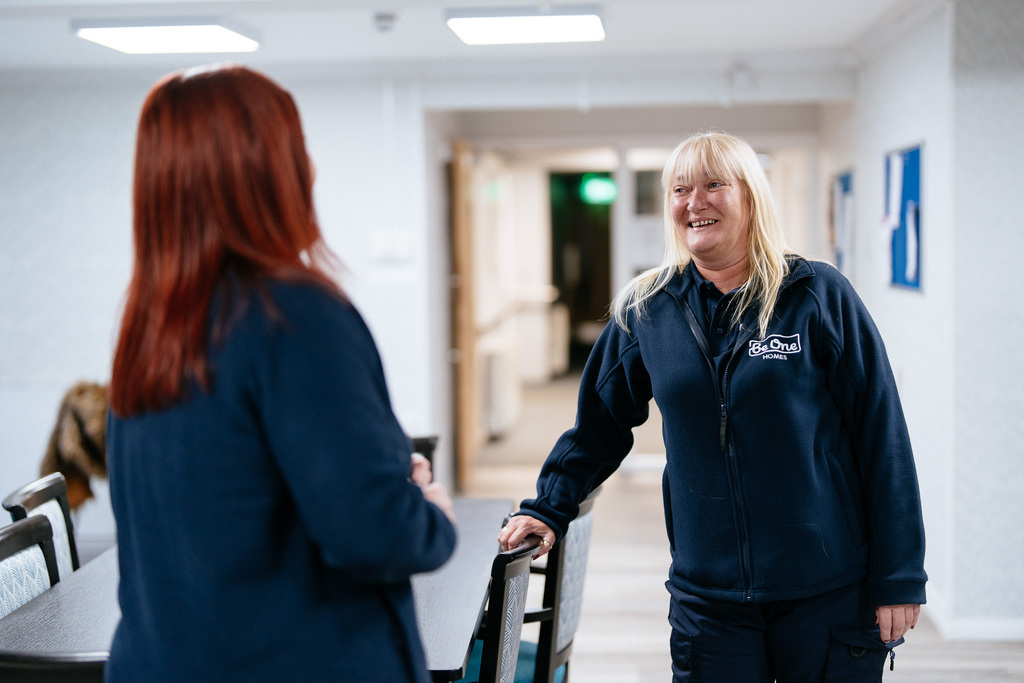
Two female Be One Homes colleagues talking to one another. They are wearing blue Be One Homes fleeces.

Home safety with mobility scooters, e-bikes/scooters, and similar devices

A female customer and female member of staff using a laptop.

Safety information for residents of high-rise buildings

The Greater Manchester Fire and Rescue Service (GMFRS) logo.

More fire safety advice on the Greater Manchester Fire and Rescue Service (GMFRS) website:

To see Greater Manchester Fire and Rescue Service’s (GMFRS’) full collection of fire safety advice on a range of topics (and in other languages), please tap here.

You can use that link to access GMFRS’ fire safety advice for both houses and flats, with expert advice on things like:

  • smoke and heat alarms,
  • cooking and kitchen safety,
  • smoking at home,
  • electricals,
  • electric bikes and scooters,
  • heating and candles,
  • balcony safety,
  • evacuation,
  • Fire Doors,
  • and more.

Greater Manchester Fire and Rescue Service offer free Home Fire Safety Assessments:

Colleagues from Greater Manchester Fire and Rescue Service may be able to visit your home and provide fire safety advice and equipment, depending on risk.

To find out more about free Home Fire Safety Assessments, check if you’re eligible, and get personalised fire safety advice on the GMFRS website, tap here.

Have you downloaded your Home Safety Guide?

These guides contain information to help keep you and others safe, covering several areas such as Fire Safety and Asbestos.

We’ve created two versions: one for houses, and one for flats.

Please remember that these guides do not replace your Tenancy Agreement, which details your duties, as well as your rights as a tenant, and our duties as a landlord.

You may also be interested in:

All pages in this section: